

Time for tea and a slice of Cake? Try this delicious gluten teabread http://t.co/kYFawJ5iVP # DKbooks #Gut Feeling #Gluten Free
This month is National Smile Month (www.nationalsmilemonth.org) a campaign organised by the British Dental Foundation to remind us all about the importance of looking after our teeth. A healthy smile is a great asset, it can make you look more attractive, feel more confident, appear younger, more approachable and more successful but the benefits of looking after your teeth and gums extends way beyond the Hollywood Smile. Poor oral hygiene has been linked with increased risk of dementia, heart disease stroke, certain types of cancer, infertility, complications in pregnancy and impotence. Regular brushing, flossing and using a fluoride containing mouth wash are an absolute must but the road to healthy teeth and gums doesn’t end there - you also need to pay attention to your diet. Some food and drinks like strong tea, coffee, red wine, liquorice, curry, beetroot and blackcurrant can stain the surface of your teeth, so if you want to keep your pearly whites pearly white consume these things in moderation and when you do swill your mouth out with water after you’ve finished eating or chew some sugar free gum. Although most of us think about sugar as the number one enemy when it comes to our teeth the real threat comes from acidic food and drinks such as fruit, fruit juice and fizzy soft drinks, even diet free fizzy drinks, which damage teeth by weakening the tooth enamel, the hard, protective coating, which protects the sensitive dentine beneath. When the enamel is worn away the dentine is exposed, allowing decay to spread more rapidly through the tooth leading to infection, inflammation, pain, sensitivity and eventually the formation of an abscess. But it’s not just presence of fermentable carbs, sugar or the acidity of the food and drinks we consume that we need to think about, the physical charactistics of a food, particular how sticky it is and how long it clings to the teeth and frequency with which we expose our teeth to these foods are also important. Each time we eat or sip a drink containing carbohydrate or sugar, decay-causing bacteria present on the teeth start to produce acid. This continues for 20 to 30 minutes after eating or drinking, longer if food sticks around the teeth. In between periods of eating and drinking saliva works to neutralise the acids and assist in the process of remineralisation but if you are constantly snacking or sipping throughout the day the tooth enamel doesn’t have a chance to remineralise completely and caries can start to occur. But not everything we eat is bad for our teeth some foods help protect against tooth decay. Eating a piece of hard cheese at the end of a meal, for instance, increases the flow of saliva which will help to neutralise acid. Dairy products also contain minerals such as calcium, which protect the teeth against demineralisation. Chewing sugar-free gum after eating will also help stimulate the production of saliva, which helps to neutralise plaque acid. Tips for Healthy Teeth and Gums þ Brush your teeth for 2 minutes twice a day with a fluoride toothpaste þ Clean between your teeth using dental floss to remove plaque and food deposits. þ Use a fluoride based mouthwash to help re-mineralise tooth enamel and kill plaque forming bacteria. þ Consume acidic or sweetened drinks such as orange juice with meals rather than in between meals. Avoid brushing your teeth for 20minutes after eating or drinking acidic food or drink. Swill your mouth out with water as soon as you’ve finished eating these foods þ Chew sugar-free gum for 10minutes after meals helps to stimulate the production of saliva. Some chewing gums contain a sugar-free sweetener called xylitol, which suppresses caries forming bacteria þ Eat a balanced diet, rich in wholegrain cereals, beans, pulses, fruits, vegetables, lean meat/fish and dairy products. þ If you want to snack between meals choose tooth friendly snacks like yoghurt or raw vegetables þ Limit your intake of sweet foods like biscuits, cakes, chocolate and sweets. þ If you can’t brush your teeth after meals eating a stick of celery will help clean your teeth þ Visit your dentist and dental hygienist regularly.
Have You Got a Gut Feeling? This week is ‘Gut Feeling Week’ a campaign run by Coeliac UK designed to improve awareness about Coeliac Disease. First some facts and figures about the condition 1 in 100 people in the UK have Coeliac Disease, however only 1 in 8 of those with the condition are diagnosed, which means around 500,000 people in the UK may have the disease without knowing it. Coeliac disease can occur at any age, symptoms may first appear when a baby is weaned onto wheat containing cereals, but it is can also occur later in life. A study carried out by the Mayo Clinic in conjunction with the University of Minnesota found that the number of people suffering from Coeliac Disease has quadrupled in the last few decades. Diagnosis of Coeliac Disease is not always straightforward and Coeliac UK say it takes an average of 13 years for people to be diagnosed. To help publicise Gut Feeling Week and demonstrate just how delicious a gluten free diet can be each day this week I will post a recipe taken from the Gluten Free Cook Book (ISBN 978-1-4053-9431-4) written by yours truly along with Heather Whinney and Jane Lawrie and published by DK. The book explains more about the condition and what it means along with practical advice about how to follow a gluten free diet and 230 delicious recipes. The publishers have very kindly agreed to give away 2 copies of the book to readers of this blog. To win a copy all you need to do is answer the following question then leave your name and email address in the comments box. To qualify for the prize draw entries need to be in before 19th May. Which of these grains is NOT gluten free? a) Spelt b) Buckwheat c) Quinoa For more information about Coeliac Disease and the Gut Feeling campaign go to www.coeliac.org.uk
Update on my letter to the Sunday Times - 8th May 2013 Dear Fiona Hunter Thank you for your email about the graphic which was published with the article “‘Natural’ food has more sugar than Coca-Cola”. You are right that it would have been more accurate to compare the same portion sizes. We plan to publish a clarification on Sunday. Thank you for keeping us on our toes. Yours sincerely Parin Janmohamed Letters Editor So, The Sunday Times were decent enough to admit their article was misleading. You will have to make your mind up as to whether it was a case of sloppy journalism or a blatant attempt to mislead. My guess it was simply a case of ‘never let the facts get in the way of a good headline’. Once again this only serves to remind us, as I said in my previous blog, that the mass media is not an extension of the education system; their aim, too often it seems, is to entertain not to educate. Unfortunately there are too many journalists, too ready to hop on the band wagon and give publicity to faddist, fashionable theories about diet with little concern for the quantity or quality of the underlying evidence. As promised The Times did indeed issue a very short, teeny tiny, ‘clarification’ at the bottom of their letters page in this week’s paper.
Sunday Times Letter 8th May 2013 As a qualified nutritionist I share your concerns over the high levels of sugar in some foods but felt the article, Natural food has more sugar than Coca-Cola, in this week’s Sunday Times (5/5/13) was both misleading and showed a wilful disregard for communicating a balanced message to your readership. Looking at one nutrient, in this case sugar, in isolation of the other nutrients a food offers is short sighted and demonstrates a lack of understanding. Cranberry juice, for instance, provides vitamin C and phytochemicals which offer protection against Urinary Tract Infections. In their natural form cranberries are very sour and the addition of sugar is necessary to make the drink palatable. I am at a loss to understand why the article compares the sugar in 1 litre of cranberry juice with the sugar in just 330mls cola. This is either very sloppy journalism or a genuine attempt to mislead. When making comparisons it’s important to compare like-with-like, either on a weight for weight basis or per portion. A typical 200ml glass of cranberry juice drink would provide the equivalent 5.6 teaspoons of sugar. Sugar in fruit yogurt is a little more difficult to defend. If you want to eat fruit yogurt the most nutritious way to do so is to add fresh fruit or fruit puree to plain yogurt. Adding fruit will help you reach your five-a-day target, adds vitamin C, fibre and phytochemicals and natural sweetness as opposed to ‘added’ sugar. Having said that, suggesting, as your article does, that Rachel’s low fat yogurt, contains the equivalent of 15.5 teaspoons sugar, is once again misleading, firstly because this figure is based on natural sugar (i.e lactose from milk) along with added sugar and secondly because the figure you give is for 450g of yogurt – this is equivalent of three servings. Another important point your journalists fail to make is that cola and many other soft drinks contain what nutritionists refer to as empty calories, what this means is sugar without the benefit of any other nutrients. In many of the other food and drinks mentioned in the article sugar comes packaged with other beneficial nutrients like calcium, dietary fibre and vitamin C. It seems to be me that in pursuit of a sensational headline you have demonstrated a sensational lack of objectivity and wantonly failed to communicate a balanced message.
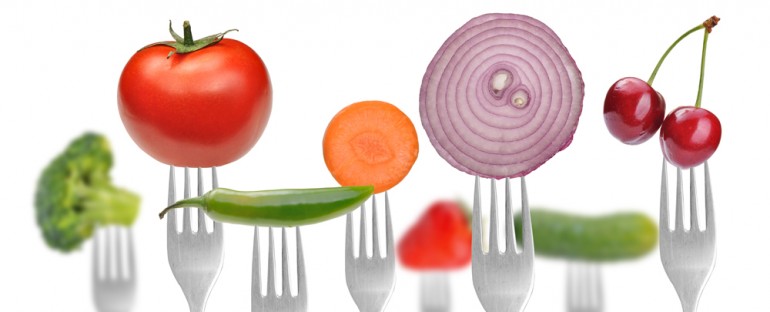
How often to do you try a new recipe, or buy an ingredient that you’ve never tried before? Chances are not very often. Most people (me included) have a handful of recipes and dishes that we cook week in week out. Why have we become unadventurous in the kitchen? Lack of time, for both shopping and cooking, is certainly one reason, but perhaps another is that we just don’t understand how important eating a variety of different foods is. Variety may be the ‘spice of life’ but I believe it’s also the key to healthy diet. Our body needs over 40 different nutrients to function properly and stay healthy and no single food or food group provides all the nutrients we need. Eating a variety of different foods is the best way to ensure you get the full range of vitamins minerals phytochemicals and other nutrients necessary for good health. Variety is particularly important when it comes to fruit and veg. When I was growing up, if someone talked about vegetables chances were they meant carrots, cabbage, swede or cauliflower because things like peppers, courgettes and sweet potato just weren’t available. Now even a modestly sized supermarket has a cornucopia of fruit and vegetables from every corner of the world. Although I’m not a big fan of exotic fruit and vegetables from far flung corners of the world (I’ll write more about the importance of eating locally grown seasonal produce in another blog) the point I’m making is that we have a wealth of fruit and veg to choose from, yet most of us choose the same things from one week to next. But good nutrition isn’t the only reason for ringing the changes once in a while. Introducing new foods into your diet could be the secret to a healthy mind as well as a healthy body. Experts in memory and mental agility suggest that breaking routines helps stimulate and refresh the brain. Living a varied and interesting life increases the chances of the brain working efficiently and changing routines and varying patterns in daily life helps us to stay alert and stimulated. So next time you go shopping, why not throw caution to the wind and try something different? – you never know it might just be what you brain and body needs!
Hello and welcome to my blog. As my friends and family already know I’ve been talking about writing a blog for quite some time now (I’m far too embarrassed to tell you how long it’s actually taken me to get around to doing it!). Anyway here it, finally, is, I hope you think it’s worth waiting for! Some of you will already have read stuff I’ve written for various magazines, newspapers, web sites etc. The beauty of writing a blog as opposed to an article that is going to published by someone else (although note to any Commissioning Ed’s that might be reading this I do like doing that as well) is that you can write about what the hell you like. While you might expect this blog to be all about nutrition, and I’m guessing the lions’ share of it will be, it’s not the only thing I’m going to write about. I’m also going to write about markets (I’m a big fan), recipes (I love cooking but like most people don’t have hours to spend in the kitchen), chefs (I’ll be spilling the beans on who’s naughty and who’s nice) and kitchen gadgets (I’m a card carrying member of the you-can-never-have-too-many-kitchen-gadgets club). There will also be book reviews, product reviews, interviews with interesting people and lots lots more. The other lovely thing about writing a blog is that it is immediate. When I worked at Good Housekeeping magazine I was writing about Christmas in September, Easter at Christmas and joys of eating salad and bikini diets in January – the problem with long lead times is that it precludes you from writing about stuff that might be new and in the news. One of the things I want to do with this blog is to be able to respond to news stories / new research / food scares / new products etc as and when they are happening not three months later. So dear reader, if there’s a breaking news story that involves food please look here for an honest, independent assessment of the situation based on fact rather than fiction. If you want to know more about my qualifications and what I do for a day job you’ll find all that stuff on my website if you‘re interested in learning a bit more about my likes and dislikes read on. About Me: Favourite cuisine: Vietnamese, anything spicy but not too hot Loves: markets, marmite, good coffee, other people who are passionate about food, goats cheese (the goatier the better), Reese’s peanut butter cups (peanut and chocolate – a match made in heaven), asparagus, cherries, heirloom tomatoes, ginger and gingers (you know who you my lovelies), sweet chilli sauce, mojitos, Heston Blumenthal’s’ Earl grey and lemon gin, pad Thai noodles, fresh herbs , No 42 at Wagamamas, pizza (thin crust), pomegranates, Marks & Spencer Cornish Cruncher, Total Greek yogurt, Leon Favourite food shops/markets: The Spice Shop on Portobello Road, Thai Supermarket Chepstow Road, Figueres market in Spain, The night market in Kota Bharu, Malaysia Favourite cookery books: Plenty by Yottam Ottelenghi. Alice’s Cook Book by Alice Hart, The French Kitchen by Joanne Harris & Fran Ward, Jams & Chutneys by Thane Prince Hates: Fruit that tastes of nothing, oysters (sorry I know they are uber chic and I do try them from time to time but they do nothing for me), chefs who seem to think the only way to make food taste good is to use loads of cream and butter, over cooked soggy vegetables (inexcusable!), global coffee chains that don’t pay their taxes
 Latest Tweets
 RT @healthyfoodmag: If colder days and darker nights leave you feeling miserable, this article is for you. HFG nutritionist,… Click here for link,
 - Lunch at Flax and Kale, #superhealthy #super tasty #❤️Barcelona @ Barcelona, Spain Click here for link,
- Why cooking from scratch is the way forward Click here for link,
- RT @TelegraphFood: Is organic food really healthier? Nutritionist @fiona_nutrition helps bust the biggest food myths
Click here for link,