

Time for tea and a slice of Cake? Try this delicious gluten teabread http://t.co/kYFawJ5iVP # DKbooks #Gut Feeling #Gluten Free
Update on my letter to the Sunday Times - 8th May 2013 Dear Fiona Hunter Thank you for your email about the graphic which was published with the article “‘Natural’ food has more sugar than Coca-Cola”. You are right that it would have been more accurate to compare the same portion sizes. We plan to publish a clarification on Sunday. Thank you for keeping us on our toes. Yours sincerely Parin Janmohamed Letters Editor So, The Sunday Times were decent enough to admit their article was misleading. You will have to make your mind up as to whether it was a case of sloppy journalism or a blatant attempt to mislead. My guess it was simply a case of ‘never let the facts get in the way of a good headline’. Once again this only serves to remind us, as I said in my previous blog, that the mass media is not an extension of the education system; their aim, too often it seems, is to entertain not to educate. Unfortunately there are too many journalists, too ready to hop on the band wagon and give publicity to faddist, fashionable theories about diet with little concern for the quantity or quality of the underlying evidence. As promised The Times did indeed issue a very short, teeny tiny, ‘clarification’ at the bottom of their letters page in this week’s paper.
Sunday Times Letter 8th May 2013 As a qualified nutritionist I share your concerns over the high levels of sugar in some foods but felt the article, Natural food has more sugar than Coca-Cola, in this week’s Sunday Times (5/5/13) was both misleading and showed a wilful disregard for communicating a balanced message to your readership. Looking at one nutrient, in this case sugar, in isolation of the other nutrients a food offers is short sighted and demonstrates a lack of understanding. Cranberry juice, for instance, provides vitamin C and phytochemicals which offer protection against Urinary Tract Infections. In their natural form cranberries are very sour and the addition of sugar is necessary to make the drink palatable. I am at a loss to understand why the article compares the sugar in 1 litre of cranberry juice with the sugar in just 330mls cola. This is either very sloppy journalism or a genuine attempt to mislead. When making comparisons it’s important to compare like-with-like, either on a weight for weight basis or per portion. A typical 200ml glass of cranberry juice drink would provide the equivalent 5.6 teaspoons of sugar. Sugar in fruit yogurt is a little more difficult to defend. If you want to eat fruit yogurt the most nutritious way to do so is to add fresh fruit or fruit puree to plain yogurt. Adding fruit will help you reach your five-a-day target, adds vitamin C, fibre and phytochemicals and natural sweetness as opposed to ‘added’ sugar. Having said that, suggesting, as your article does, that Rachel’s low fat yogurt, contains the equivalent of 15.5 teaspoons sugar, is once again misleading, firstly because this figure is based on natural sugar (i.e lactose from milk) along with added sugar and secondly because the figure you give is for 450g of yogurt – this is equivalent of three servings. Another important point your journalists fail to make is that cola and many other soft drinks contain what nutritionists refer to as empty calories, what this means is sugar without the benefit of any other nutrients. In many of the other food and drinks mentioned in the article sugar comes packaged with other beneficial nutrients like calcium, dietary fibre and vitamin C. It seems to be me that in pursuit of a sensational headline you have demonstrated a sensational lack of objectivity and wantonly failed to communicate a balanced message.

‘You nutritionists are always changing your mind about what we should and shouldn’t eat’ If I had a £1 for every time someone said that to me that I’d be a very rich women. The truth is that the basic principles of what we should and shouldn’t eat to stay fit and healthy have remained the same ever since I started to study the subject and long before that too. What has changed in recent years is the focus of nutrition. When I went to University, which was over 30 years ago now, we were taught, for instance, that Vitamin C was needed to prevent scurvy. While this is indeed true, we now know that Vitamin C actually does much more than this. In recent years, the focus of nutrition research has shifted from what we need to eat for adequate nutrition towards what we need to eat for optimal nutrition. In addition to guarding against deficiency diseases the right diet can offer protection against heart disease, cancer, cataracts, osteoporosis, dementia and many other such diseases, it can improve physical and mental performance and influence the way we age. What has also changed in recent years is our interest in the subject and this is reflected in the amount of research into the effect of diet on all aspects of health and performance and also in the space dedicated to the topic on the internet, in newspapers, magazines and on TV and the radio. In some respects this heightened media attention is a good thing because knowledge is power and it allows us to take responsibility for our own health. The problem is that in the UK nutrition stories in the media are frequently poorly researched, sensationalised, distorted, unrealistic in terms of the advice they give, inaccurate and misleading. In an article titled ‘The mass media and other channels for communication nutrition information’ published in the Proceedings of the Nutrition Society, Michael Turner reminds us that ‘The mass media is not an extension of the education system; their role is to entertain not to educate. They are commercial organisations whose primary aim is to make money.’ He then goes on to say that ‘In media reporting there is often a lack of objectivity. Information is often selected to support preconceived ideas that reflect the prejudices of the journalist or producer…Publicity is given to the faddist, fashionable theories linking diet and disease with little apparent concern for the quantity or quality of the evidence behind them. Journalists are too ready to give publicity to cranky, unorthodox ideas or to concepts that conform to their own prejudices.’ The paper, from which I’m quoting, was published in 1984 but sadly, in my opinion, little has changed in 2013. So how do we keep abreast of the latest research and thoughts on diet? Well, while there’s a truly scary amount of rubbish out there on the World Wide Web there is also some very useful, well researched, evidenced based stuff. So, if you are interesting in reading more on the subject, I thought I would share with you my top 3 must-read web sites and blogs. www.gibneyonfood.blogspot.co.uk www.foodpolitics.com www.scepticalnutritionist.com.au Of course there are many more so if have a favourite site that you would like to recommend please let me know, I’ll have a look at it and if I think it’s a good one I’ll post the link on this site.
Several years ago my other half was knocked off his bike and fractured his skull. Thankfully he’s now fully recovered, but one of the long term consequences of the accident was that he lost his sense of smell (bilateral anosmia for those of you who like to get technical). Much of what we taste actually comes via the olfactory nerve, which in Tim’s case is damaged and doesn’t do what its suppose to do and as a result his food can taste rather bland and insipid (nothing to do with my cooking!). To make his food taste of something, he likes to add lots of salt (well he would if he didn’t live with a nutritionist) so I’m always looking for ways to enhance the flavour of food without adding too much salt. Dukkah does the job perfectly. Dukkah is an Egyptian spice mix made from a blend of nuts and seeds. The word is derived from the Arabic for ‘to pound’ since the mixture of spices and nuts are pounded together after being dry roasted. It’s delicious scattered over salads, hummus, vegetables, fish or chicken, in fact, we sprinkle it over pretty much everything we eat at the moment. You can experiment with different nuts and spice blends. I’ve replaced almonds with hazelnuts and pistachio nuts and both work well. Adding a touch of smoked paprika adds a delicious smokiness or sumac gives a subtle hint of lemon. I add a small amount of salt which seems to bring out the flavours of the other spices but it’s only a small amount and you can leave it out if you want to. Ingredients: 75g almonds 4 tablespoons sesame seeds 2 tablespoons cumin seeds 1 tablespoon coriander seeds ½ tsp chilli flakes ½ tsp smoked paprika ½ teaspoon salt, optional Method: 1. Preheat oven to 180C. Place the almonds on a non-stick baking the tray and bake for 10 mins. Allow to cool. 2. Heat a small non-stick frying pan, once the pan is hot add the cumin, coriander and sesame seeds and dry roast for 30seconds. 3. Place all the ingredient is a smaller blender and process to a coarse powder. 4. Store in an airtight container for up to 1 month.
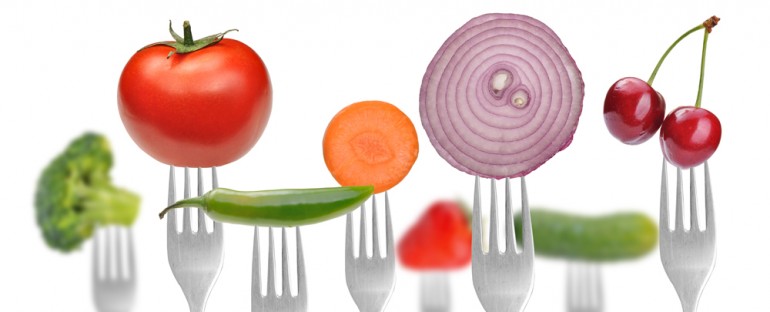
How often to do you try a new recipe, or buy an ingredient that you’ve never tried before? Chances are not very often. Most people (me included) have a handful of recipes and dishes that we cook week in week out. Why have we become unadventurous in the kitchen? Lack of time, for both shopping and cooking, is certainly one reason, but perhaps another is that we just don’t understand how important eating a variety of different foods is. Variety may be the ‘spice of life’ but I believe it’s also the key to healthy diet. Our body needs over 40 different nutrients to function properly and stay healthy and no single food or food group provides all the nutrients we need. Eating a variety of different foods is the best way to ensure you get the full range of vitamins minerals phytochemicals and other nutrients necessary for good health. Variety is particularly important when it comes to fruit and veg. When I was growing up, if someone talked about vegetables chances were they meant carrots, cabbage, swede or cauliflower because things like peppers, courgettes and sweet potato just weren’t available. Now even a modestly sized supermarket has a cornucopia of fruit and vegetables from every corner of the world. Although I’m not a big fan of exotic fruit and vegetables from far flung corners of the world (I’ll write more about the importance of eating locally grown seasonal produce in another blog) the point I’m making is that we have a wealth of fruit and veg to choose from, yet most of us choose the same things from one week to next. But good nutrition isn’t the only reason for ringing the changes once in a while. Introducing new foods into your diet could be the secret to a healthy mind as well as a healthy body. Experts in memory and mental agility suggest that breaking routines helps stimulate and refresh the brain. Living a varied and interesting life increases the chances of the brain working efficiently and changing routines and varying patterns in daily life helps us to stay alert and stimulated. So next time you go shopping, why not throw caution to the wind and try something different? – you never know it might just be what you brain and body needs!
Hello and welcome to my blog. As my friends and family already know I’ve been talking about writing a blog for quite some time now (I’m far too embarrassed to tell you how long it’s actually taken me to get around to doing it!). Anyway here it, finally, is, I hope you think it’s worth waiting for! Some of you will already have read stuff I’ve written for various magazines, newspapers, web sites etc. The beauty of writing a blog as opposed to an article that is going to published by someone else (although note to any Commissioning Ed’s that might be reading this I do like doing that as well) is that you can write about what the hell you like. While you might expect this blog to be all about nutrition, and I’m guessing the lions’ share of it will be, it’s not the only thing I’m going to write about. I’m also going to write about markets (I’m a big fan), recipes (I love cooking but like most people don’t have hours to spend in the kitchen), chefs (I’ll be spilling the beans on who’s naughty and who’s nice) and kitchen gadgets (I’m a card carrying member of the you-can-never-have-too-many-kitchen-gadgets club). There will also be book reviews, product reviews, interviews with interesting people and lots lots more. The other lovely thing about writing a blog is that it is immediate. When I worked at Good Housekeeping magazine I was writing about Christmas in September, Easter at Christmas and joys of eating salad and bikini diets in January – the problem with long lead times is that it precludes you from writing about stuff that might be new and in the news. One of the things I want to do with this blog is to be able to respond to news stories / new research / food scares / new products etc as and when they are happening not three months later. So dear reader, if there’s a breaking news story that involves food please look here for an honest, independent assessment of the situation based on fact rather than fiction. If you want to know more about my qualifications and what I do for a day job you’ll find all that stuff on my website if you‘re interested in learning a bit more about my likes and dislikes read on. About Me: Favourite cuisine: Vietnamese, anything spicy but not too hot Loves: markets, marmite, good coffee, other people who are passionate about food, goats cheese (the goatier the better), Reese’s peanut butter cups (peanut and chocolate – a match made in heaven), asparagus, cherries, heirloom tomatoes, ginger and gingers (you know who you my lovelies), sweet chilli sauce, mojitos, Heston Blumenthal’s’ Earl grey and lemon gin, pad Thai noodles, fresh herbs , No 42 at Wagamamas, pizza (thin crust), pomegranates, Marks & Spencer Cornish Cruncher, Total Greek yogurt, Leon Favourite food shops/markets: The Spice Shop on Portobello Road, Thai Supermarket Chepstow Road, Figueres market in Spain, The night market in Kota Bharu, Malaysia Favourite cookery books: Plenty by Yottam Ottelenghi. Alice’s Cook Book by Alice Hart, The French Kitchen by Joanne Harris & Fran Ward, Jams & Chutneys by Thane Prince Hates: Fruit that tastes of nothing, oysters (sorry I know they are uber chic and I do try them from time to time but they do nothing for me), chefs who seem to think the only way to make food taste good is to use loads of cream and butter, over cooked soggy vegetables (inexcusable!), global coffee chains that don’t pay their taxes
 Latest Tweets
 21 jours et vous n'avez pas remboursé l'argent sur mon compte - dites-moi quand je le recevrai svp. @pixmania Click here for link,
 - BBC News - Dairy-free diets warning over risk to bone health Click here for link,
- RT @CaulfieldTim: Worth remembering: That compelling YouTube testimonial ain't evidence Click here for link #science… Click here for link,
- If you are one of the 46% of 16-24yr olds who avoids milk make sure you get enough calcium in your diet Click here for link,